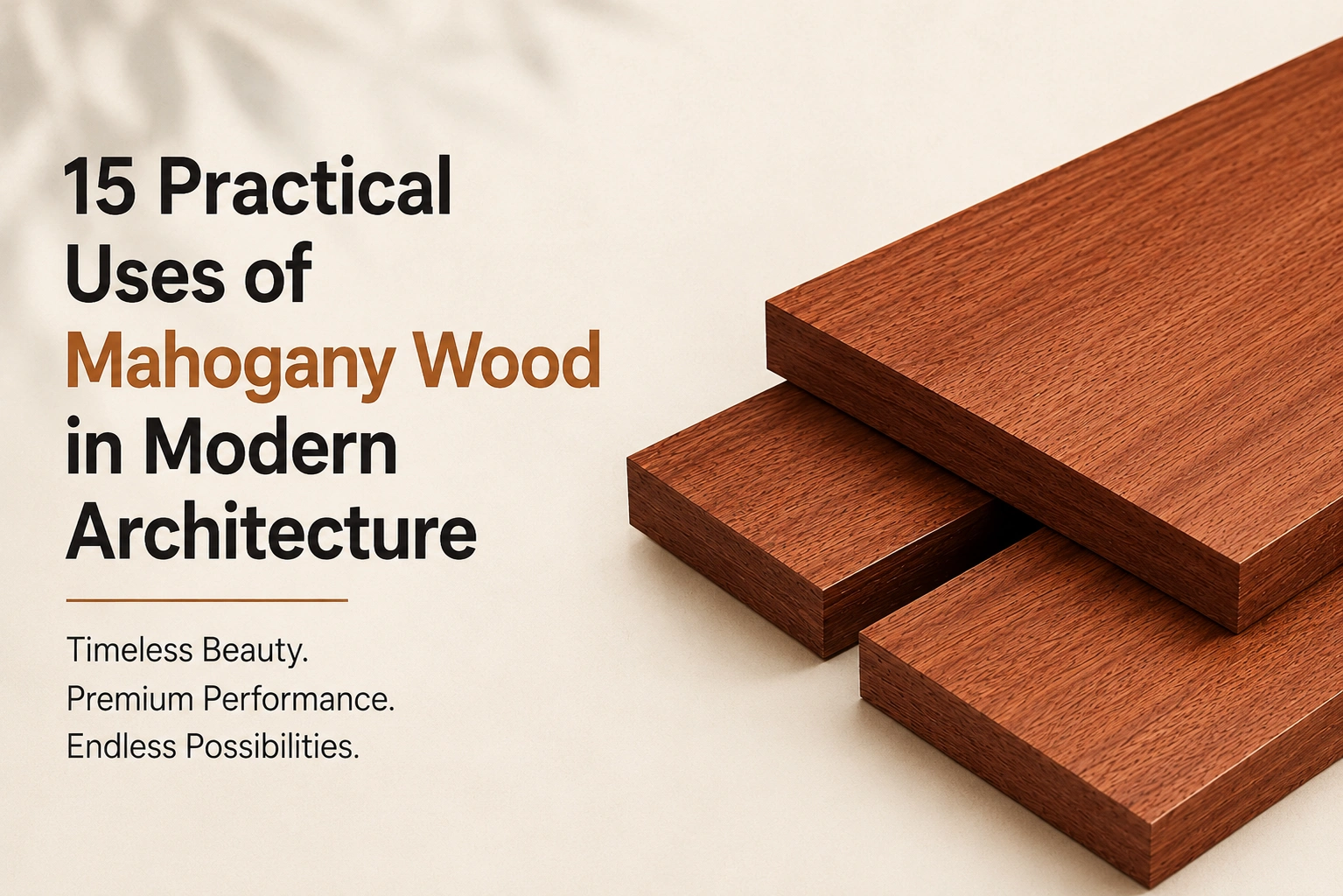
Mahogany wood uses extend far beyond traditional furniture making. Its rich colour, attractive grain, workability, dimensional stability, and premium appearance make it suitable for doors, wall panelling, cabinetry, staircases, furniture, hospitality interiors, architectural detailing, and other high-end applications where aesthetics and performance matter.
Introduction
Mahogany has long been associated with premium woodworking, but its relevance extends well into contemporary architecture and interior design. Today, architects, designers, furniture manufacturers, builders, and homeowners use mahogany to introduce warmth, character, and a refined natural finish into modern spaces.
One of its biggest advantages is versatility. Depending on the specification and project requirements, mahogany can be machined into detailed furniture, architectural elements, doors, panels, stair components, and custom joinery.
Understanding the different mahogany wood uses can help professionals determine where this premium timber can deliver the greatest combination of visual appeal and practical performance.
What Is Mahogany Wood?
Mahogany is a premium hardwood valued for its warm reddish-brown appearance, attractive grain, workability, and stability. Different mahogany species and sources can have variations in colour, density, grain, and performance, so the exact timber specification should always be verified before a project begins.
For architecture, mahogany is particularly attractive because it can provide a sophisticated natural finish while remaining workable enough for detailed manufacturing and custom joinery.
It is commonly considered for luxury residential interiors, hospitality spaces, executive offices, furniture, doors, and architectural features.
Why Is Mahogany Important in Modern Architecture?
Modern architecture increasingly combines natural materials with contemporary forms. Mahogany fits this design direction because it can soften minimalist spaces while adding depth and warmth.
Key advantages include:
- Rich natural colour
- Distinctive grain
- Good workability
- Attractive finishing potential
- Suitable dimensional stability
- Premium visual appeal
- Versatility across interior applications
- Compatibility with contemporary and traditional designs
For designers, this means mahogany can function as both a practical construction material and a major visual feature.
15 Practical Mahogany Wood Uses in Modern Architecture
1. Luxury Interior Doors
Mahogany is an excellent option for premium interior doors where the natural grain is intended to become part of the design.
It can be used for bedroom doors, study doors, executive office doors, hotel room doors, and custom architectural entrances.
2. Main Entrance Doors
A large mahogany entrance door can create a strong first impression.
Its rich colour and natural grain work particularly well with:
- Stone façades
- Glass
- Metal
- Contemporary architecture
- Traditional architectural styles
For luxury homes, a carefully finished mahogany door can become an architectural focal point.
3. Wall Panelling
Mahogany can be used for feature walls and decorative wall panelling to introduce warmth into otherwise minimal interiors.
It works particularly well in:
- Living rooms
- Bedrooms
- Executive offices
- Hotel lobbies
- Private lounges
- Restaurants
4. Luxury Furniture
Furniture remains one of the most established mahogany wood applications.
Manufacturers can use mahogany for:
- Dining tables
- Coffee tables
- Beds
- Cabinets
- Sideboards
- Study tables
- Executive desks
Its natural appearance makes it particularly suitable for statement furniture.
5. Executive Office Interiors
Mahogany’s formal appearance makes it suitable for premium corporate environments.
It can be incorporated into:
- Boardroom tables
- Executive desks
- Reception counters
- Storage cabinets
- Conference furniture
- Wall features
The material can help create a sophisticated and established visual identity.
6. Custom Cabinetry
Mahogany is suitable for custom cabinetry where designers want a premium natural timber appearance.
Applications include:
- Kitchen cabinetry
- Walk-in wardrobes
- Bar cabinets
- Display units
- Library shelving
- Media cabinets
7. Staircases and Handrails
Mahogany can be used for selected staircase components, including handrails, balustrades, treads, and decorative elements, depending on structural specifications.
Its attractive grain allows staircase components to function as architectural design features rather than simply structural elements.
8. Hotel and Hospitality Interiors
Luxury hospitality spaces require materials that communicate quality while supporting demanding design requirements.
Mahogany can be used in:
- Hotel furniture
- Reception desks
- Guestroom furniture
- Restaurant interiors
- Lounge areas
- Decorative panelling
Its warm appearance can contribute to a more welcoming and premium atmosphere.
9. Restaurant Interiors
Restaurants increasingly use natural timber to create memorable interiors.
Mahogany can be incorporated into:
- Bar counters
- Dining furniture
- Wall panelling
- Partitions
- Feature ceilings
- Decorative joinery
The material works particularly well in premium restaurants where natural textures are central to the design concept.
10. Library and Study Interiors
The rich appearance of mahogany makes it especially suitable for libraries, home offices, studies, and reading rooms.
It can be used for:
- Bookshelves
- Desks
- Cabinets
- Wall panels
- Storage units
- Decorative mouldings
The result is a warm, sophisticated environment with strong visual continuity.
11. Decorative Architectural Elements
Mahogany can be machined into detailed components for custom architectural projects.
Potential applications include:
- Decorative trims
- Mouldings
- Columns
- Frames
- Screens
- Feature elements
Its workability gives designers greater freedom when creating customised details.
12. Window and Door Frames
Mahogany can be considered for selected window and door frame applications where appearance, workability, and timber stability are important.
The final specification should account for the project’s climate, exposure, installation method, and finishing system.
Also Read: Why Walnut Wood Is the First Choice for Luxury Furniture
13. Feature Ceilings
Timber ceilings can add warmth and texture to large architectural spaces.
Mahogany can be incorporated into feature ceilings in:
- Luxury residences
- Hotels
- Restaurants
- Clubhouses
- Executive spaces
Combining timber with concealed lighting can create a visually distinctive ceiling without making the space feel overly decorative.
14. Custom Joinery
Custom joinery is another important application.
Architects and interior designers can specify mahogany for integrated furniture, built-in storage, display units, partitions, and bespoke architectural elements.
This makes it particularly useful for projects where standard furniture cannot achieve the desired design outcome.
15. Premium Commercial Interiors
Mahogany can also be considered for selected commercial spaces where the objective is to create a premium environment.
Applications may include:
- Corporate offices
- Luxury retail stores
- Private clubs
- High-end clinics
- Showrooms
- Hospitality developments
Its natural appearance can help distinguish important areas such as reception zones, meeting rooms, and customer-facing spaces.
Mahogany Wood vs Other Furniture & Architectural Woods
Mahogany is not the only premium timber available for modern architecture. The best choice depends on colour, grain, durability, application, budget, and design intent.
| Feature | Mahogany | Maple | White Ash | White Oak |
|---|---|---|---|---|
| Natural Appearance | Rich, warm | Light, clean | Light, prominent grain | Light to medium |
| Grain Character | Moderate to distinctive | Fine | Strong | Prominent |
| Luxury Interiors | Excellent | Excellent | Very Good | Excellent |
| Workability | Excellent | Very Good | Excellent | Very Good |
| Furniture | Excellent | Excellent | Excellent | Excellent |
| Custom Joinery | Excellent | Very Good | Excellent | Excellent |
| Modern Interiors | Excellent | Excellent | Excellent | Excellent |
Designers seeking a lighter visual palette can consider maple wood, particularly for contemporary and minimalist interiors.
For projects where visible grain and a lighter natural appearance are desired, white ash wood can provide an attractive alternative.
White oak wood is another versatile choice for furniture, flooring, cabinetry, and architectural interiors.
These options form part of the wider exotic hardwood portfolio available for premium architectural and furniture applications.
How to Choose Mahogany for an Architectural Project
Before specifying mahogany, professionals should evaluate several factors.
Step 1: Define the Application
Determine whether the timber is required for furniture, doors, wall panels, cabinetry, joinery, or another application.
Step 2: Evaluate Timber Quality
Check:
- Grade
- Moisture condition
- Dimensions
- Grain quality
- Visible defects
- Storage conditions
Step 3: Consider the Design
Decide whether the natural grain will be exposed, stained, polished, or finished with another coating.
Step 4: Match the Timber to the Environment
Interior and exterior applications have different performance requirements. Exposure to moisture, sunlight, temperature changes, and humidity should be considered before final selection.
Step 5: Source from a Reliable Supplier
Premium timber should be sourced from an established supplier capable of providing consistent quality, specifications, availability, and technical guidance.
Common Mistakes When Using Mahogany Wood
Choosing Timber Only for Its Colour
Colour alone does not determine timber quality. Grade, moisture condition, grain, dimensions, and intended application are equally important.
Ignoring Moisture Content
Poorly conditioned timber can move, shrink, or develop defects after installation.
Using the Same Specification for Every Application
A furniture project and an architectural door project may require different timber specifications.
Selecting Based Only on Price
Premium timber is a long-term investment. Comparing only the initial price can result in compromises in quality and performance.
Expert Recommendation
Mahogany is particularly effective when a project requires natural warmth, premium aesthetics, and detailed craftsmanship.
For architects and designers, the best results come from treating mahogany as part of the overall design strategy rather than simply as a construction material.
Consider:
- The surrounding materials
- Lighting
- Grain direction
- Finish
- Furniture proportions
- Interior colour palette
- Environmental conditions
Selecting the correct timber specification at the design stage can significantly improve the final result.
Why Choose Bansal Forest Products?
Bansal Forest Products (BFP) is a premium wood supplier in India with an extensive portfolio of imported hardwoods, softwoods, teak wood, thermo wood, engineered wood, logs, and sawn timber.
With a wide variety of timber solutions, BFP serves architects, interior designers, furniture manufacturers, builders, contractors, dealers, hospitality businesses, and commercial projects across India.
BFP’s broad portfolio allows professionals to evaluate different species according to application, aesthetics, performance, and project requirements.
For projects requiring premium imported timber, BFP combines product variety with sourcing expertise and nationwide supply capabilities.
Key Takeaways
The mahogany wood uses landscape is extensive, particularly in premium architecture and interior design.
The 15 major applications covered in this guide include:
- Interior doors
- Main entrance doors
- Wall panelling
- Luxury furniture
- Executive offices
- Custom cabinetry
- Staircases and handrails
- Hospitality interiors
- Restaurant interiors
- Libraries and studies
- Decorative architectural elements
- Window and door frames
- Feature ceilings
- Custom joinery
- Premium commercial interiors
Mahogany is particularly valuable when designers want to combine natural timber character with sophisticated architectural detailing.
Frequently Asked Questions
1. What are the main uses of mahogany wood?
Mahogany is commonly used for furniture, doors, cabinetry, wall panelling, architectural joinery, stair components, hospitality interiors, decorative elements, and premium commercial spaces.
2. Is mahogany good for furniture?
Yes. Mahogany is widely valued for furniture because of its attractive appearance, workability, stability, and premium finish.
3. Is mahogany suitable for interior architecture?
Yes. It can be used for doors, wall panels, cabinetry, feature ceilings, custom joinery, furniture, and other interior architectural elements.
4. Why is mahogany considered a premium wood?
Its rich appearance, attractive grain, workability, and suitability for detailed craftsmanship contribute to its premium positioning.
5. Can mahogany be used for doors?
Yes. Mahogany can be considered for interior and selected exterior door applications, subject to the project’s environmental conditions, construction details, and finishing requirements.
6. Is mahogany suitable for modern interiors?
Yes. Although traditionally associated with classic interiors, mahogany can work effectively in modern architecture when paired with materials such as glass, stone, metal, and minimalist forms.
7. How do I choose good-quality mahogany?
Evaluate the timber’s species, grade, moisture condition, dimensions, grain, visible defects, storage conditions, and supplier reliability before purchasing.
Conclusion
Mahogany continues to hold a strong position in premium architecture because it combines natural beauty with practical workability and design versatility.
From luxury furniture and entrance doors to wall panelling, executive interiors, hospitality projects, cabinetry, and custom joinery, its applications extend across both residential and commercial architecture.
The key to achieving the best results is selecting the right timber specification for the intended application and sourcing it through a reliable premium timber supplier.
For architects, designers, builders, furniture manufacturers, and homeowners looking to incorporate premium wood into their next project, Bansal Forest Products offers a broad range of timber solutions for different architectural and design requirements.
Get Premium Mahogany Wood for Your Project
Planning a furniture, interior, hospitality, or architectural project?
- Visit Us: https://bfppl.com/
- WhatsApp Us: +91-99920 23797
- Email Us: enquiry@bfppl.com
Connect with Bansal Forest Products for product availability, specifications, and project-specific timber requirements.