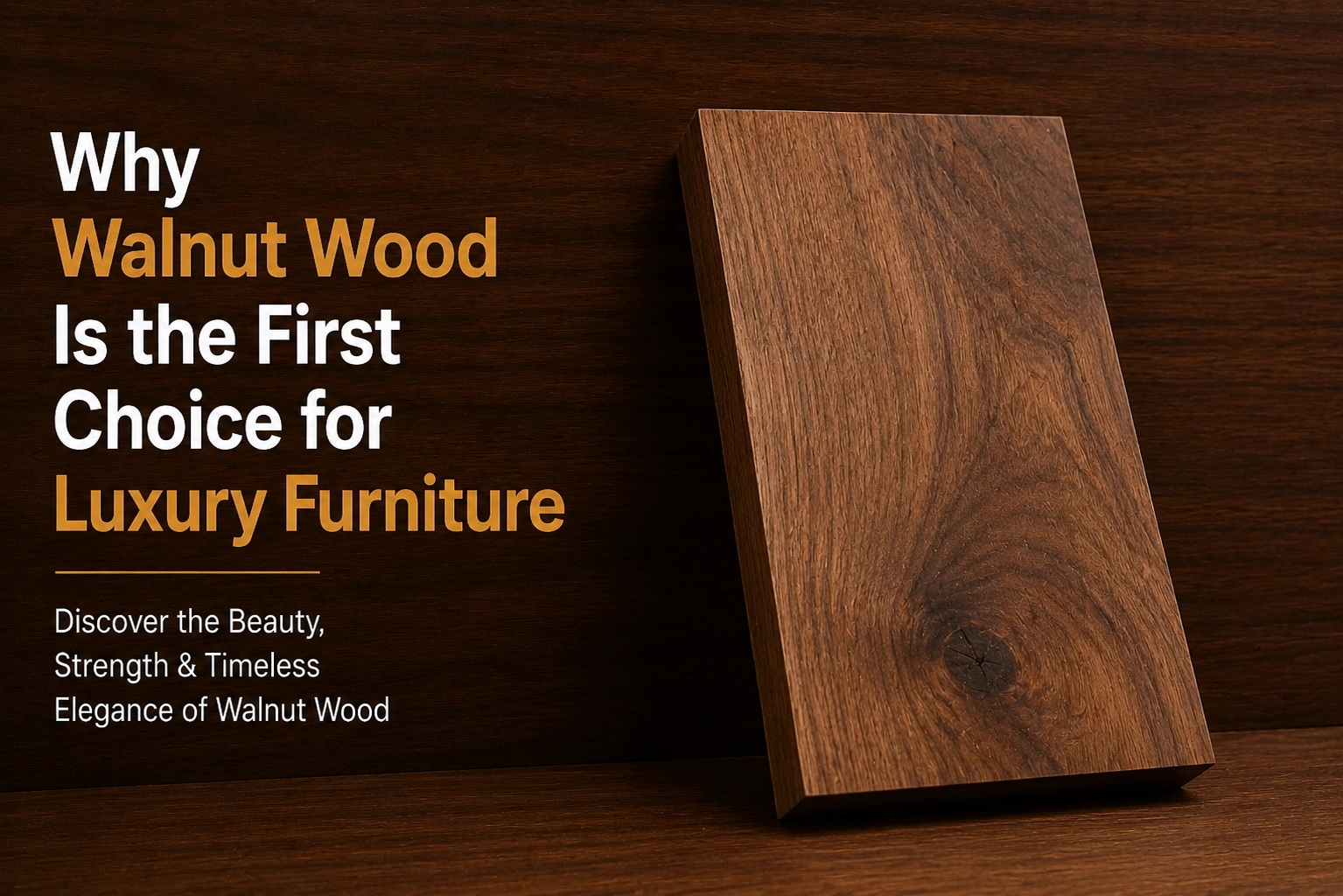
Walnut wood for furniture is highly valued for its rich colour, distinctive grain, excellent workability, dimensional stability, and premium appearance. Its combination of durability and sophisticated aesthetics makes it particularly suitable for luxury furniture, executive interiors, designer cabinetry, hospitality projects, and high-end residential spaces.
What Is Walnut Wood?
Walnut is a premium hardwood known for its naturally rich brown colour, attractive grain patterns, and excellent finishing characteristics. Depending on the species and source, walnut can range from lighter brown tones to deep chocolate shades with subtle variations in grain.
Its balance of strength, stability, workability, and visual appeal makes walnut particularly popular among furniture manufacturers, architects, interior designers, and luxury residential projects.
Unlike timber selected purely for structural strength, walnut offers an additional advantage: it can become a major visual element of the interior design itself.
This makes it especially suitable for statement furniture where the natural character of the timber needs to remain visible.
Why Is Walnut Wood Popular for Luxury Furniture?
Luxury furniture requires more than durability. The material must contribute to the overall design, feel, and perceived value of the space.
Walnut is popular because it offers a combination of:
- Rich natural colour
- Distinctive grain patterns
- Excellent machining properties
- Good dimensional stability
- Premium visual appeal
- Smooth finishing
- Long-term usability
For designers, this allows walnut to work across both traditional and contemporary interiors.
For furniture manufacturers, its workability allows detailed designs, curved elements, panels, tables, cabinets, and custom pieces to be manufactured with precision.
Key Benefits of Walnut Wood for Furniture
1. Rich and Premium Appearance
One of walnut’s most recognisable characteristics is its naturally warm brown appearance.
Its colour can create a sophisticated visual contrast against:
- Neutral walls
- Stone surfaces
- Metal accents
- Glass
- Light-coloured fabrics
- Contemporary architectural finishes
This makes walnut particularly effective in luxury residential and hospitality interiors.
2. Distinctive Natural Grain
Walnut has an attractive grain that can range from relatively straight patterns to more expressive figures.
When properly cut and finished, the grain becomes a defining feature of the furniture.
This is particularly valuable for:
- Dining tables
- Executive desks
- Coffee tables
- Cabinets
- Wall panels
- Sideboards
- Luxury wardrobes
3. Excellent Workability
Furniture manufacturers value walnut because it can be machined, shaped, sanded, and finished effectively.
This makes it suitable for both straightforward furniture designs and more detailed custom pieces.
For architects and designers, this workability creates greater flexibility when translating complex design concepts into finished furniture.
4. Good Dimensional Stability
Furniture timber needs to remain stable as environmental conditions change.
Walnut’s dimensional stability makes it suitable for interior furniture where changes in temperature and humidity can otherwise contribute to movement, cracking, or deformation.
However, correct seasoning, storage, manufacturing, and installation remain essential for achieving the best performance.
5. Excellent Finishing Potential
Walnut can be finished in different ways depending on the desired design outcome.
A suitable finish can:
- Highlight natural grain
- Enhance colour depth
- Improve surface protection
- Create a matte appearance
- Produce a refined polished look
This versatility allows designers to use the same timber species across different interior concepts.
Also Read: Exotic Hardwood Explained
Where Is Walnut Wood Used?
Walnut is not limited to residential furniture. Its premium appearance makes it suitable for a wide range of applications.
Luxury Residential Furniture
Walnut is commonly considered for:
- Dining tables
- Beds
- Sideboards
- Coffee tables
- Cabinets
- Study tables
- TV units
Executive and Corporate Interiors
Its sophisticated appearance works particularly well in:
- Executive desks
- Conference tables
- Boardrooms
- Reception furniture
- Private offices
Hospitality Projects
Hotels, luxury restaurants, resorts, and premium hospitality spaces can use walnut for furniture and architectural details where a warm, high-end appearance is required.
Designer Interiors
Walnut can also be incorporated into:
- Wall panelling
- Decorative cabinetry
- Feature furniture
- Custom joinery
- Architectural interiors
Walnut Wood vs Other Furniture Woods
Walnut is not automatically the best choice for every furniture application. The correct timber depends on design, environment, durability requirements, budget, and maintenance expectations.
| Feature | Walnut | Maple | White Ash | White Oak |
|---|---|---|---|---|
| Appearance | Rich, warm | Light, clean | Light, prominent grain | Light to medium |
| Grain | Distinctive | Fine | Open and visible | Strong and visible |
| Luxury Interiors | Excellent | Excellent | Very Good | Excellent |
| Workability | Excellent | Very Good | Excellent | Very Good |
| Modern Furniture | Excellent | Excellent | Excellent | Excellent |
| Traditional Furniture | Excellent | Very Good | Very Good | Excellent |
| Finishing Potential | Excellent | Excellent | Excellent | Excellent |
For lighter contemporary interiors, maple wood can be an excellent alternative because of its clean appearance and light natural colour.
Furniture designers looking for a lighter timber with an expressive grain can also consider white ash wood, particularly for modern furniture and architectural applications.
For projects requiring a classic, versatile hardwood appearance, white oak wood offers another strong option.
These species form part of the broader exotic hardwood category available for premium furniture and architectural applications.
How to Choose Walnut Wood for Furniture
Selecting walnut should involve more than checking its colour.
Step 1: Define the Application
Determine whether the timber will be used for a dining table, cabinet, executive desk, wall panel, or another application.
Different furniture pieces may require different dimensions and specifications.
Step 2: Check Timber Quality
Inspect the timber for:
- Consistent dimensions
- Suitable moisture content
- Minimal unwanted defects
- Appropriate grade
- Good storage conditions
- Consistent appearance
Step 3: Consider the Grain
For statement furniture, grain direction and appearance can significantly influence the final design.
Furniture manufacturers should plan how boards will be cut and positioned to maximise the natural character of the timber.
Step 4: Discuss Finishing Requirements
Decide whether the project requires a natural matte finish, satin appearance, polished finish, or another treatment.
The finishing system should complement rather than hide the natural characteristics of walnut.
Common Mistakes When Choosing Walnut Wood
Choosing Only by Colour
Two pieces may have similar colours but different grain, grade, moisture content, or performance characteristics.
Ignoring Moisture Content
Poorly conditioned timber can create movement after manufacturing. Properly seasoned timber is essential for quality furniture.
Buying Without Understanding the Grade
Different grades can have different visual and structural characteristics. Always clarify the grade and intended application before purchasing.
Selecting Timber Only on Price
Luxury furniture is a long-term investment. Choosing solely on initial cost can compromise appearance, manufacturing efficiency, and durability.
Expert Recommendation: Is Walnut Worth Choosing for Luxury Furniture?
For premium indoor furniture, walnut is an excellent choice when the objective is to combine luxury aesthetics with practical performance.
It is particularly suitable when the design calls for a warm, sophisticated material that can remain visually prominent rather than being hidden beneath heavy coatings or finishes.
However, professionals should select walnut based on the specific application, timber quality, moisture condition, grade, dimensions, and sourcing standards.
The supplier is therefore an important part of the purchasing decision.
Why Choose Bansal Forest Products?
Bansal Forest Products (BFP) is a premium timber supplier in India offering a wide portfolio of imported hardwoods, softwoods, teak wood, thermo wood, engineered wood, logs, and sawn timber.
With a broad range of timber varieties and sourcing capabilities, BFP serves architects, interior designers, furniture manufacturers, builders, contractors, dealers, hospitality projects, and commercial developments across India.
BFP’s extensive portfolio enables professionals to compare different timber species according to application, appearance, durability, and project requirements rather than being restricted to a single wood category.
For luxury furniture manufacturers and designers, this makes BFP a practical sourcing partner for premium timber solutions.
Key Takeaways
Walnut wood for furniture is a strong choice for luxury interiors because it combines:
- Rich natural colour
- Distinctive grain
- Excellent workability
- Good dimensional stability
- Premium finishing potential
- Long-term visual appeal
It is particularly suited to luxury residential furniture, executive interiors, hospitality projects, designer cabinetry, and statement furniture.
The best results come from selecting properly graded and conditioned timber from a reliable supplier and matching the wood specification to the furniture application.
Get Premium Walnut Wood for Your Project
Looking for walnut timber for luxury furniture, interiors, or commercial projects?
- Visit Us: https://bfppl.com/
- WhatsApp Us: +91-99920 23797
- Email Us: enquiry@bfppl.com
Connect with Bansal Forest Products for timber requirements
Frequently Asked Questions
1. Is walnut wood good for furniture?
Yes. Walnut is highly suitable for premium furniture because of its attractive grain, rich colour, workability, dimensional stability, and excellent finishing characteristics.
2. Why is walnut wood used for luxury furniture?
Walnut offers a sophisticated natural appearance combined with good performance and workability, making it suitable for high-end furniture and designer interiors.
3. Is walnut better than oak for furniture?
Neither is universally better. Walnut is preferred when a darker, warmer and more luxurious appearance is desired, while oak is often selected for its distinctive grain and versatility.
4. Is walnut wood durable?
Walnut offers good durability for interior furniture when properly selected, seasoned, manufactured, finished, and maintained.
5. Is walnut wood expensive?
Walnut is generally positioned as a premium timber, so its price can be higher than many conventional furniture woods. Cost depends on species, origin, grade, dimensions, availability, and processing.
6. What furniture can be made from walnut wood?
Walnut can be used for dining tables, beds, cabinets, executive desks, coffee tables, wardrobes, sideboards, wall panels, and custom furniture.
7. Where can I buy walnut wood in India?
Premium walnut timber can be sourced through specialised timber suppliers such as Bansal Forest Products, which offers imported hardwoods and other premium wood varieties for professional projects.
Conclusion
Walnut has earned its place among the preferred timbers for luxury furniture because it delivers something that few materials can combine so effectively: premium aesthetics, practical workability, stability, and lasting appeal.
From a statement dining table to an executive desk or luxury hotel interior, walnut can transform furniture from a functional element into a significant design feature.
For architects, designers, furniture manufacturers, and homeowners planning premium interiors, the key is not simply choosing walnut—it is selecting the right-quality walnut from a reliable timber supplier.