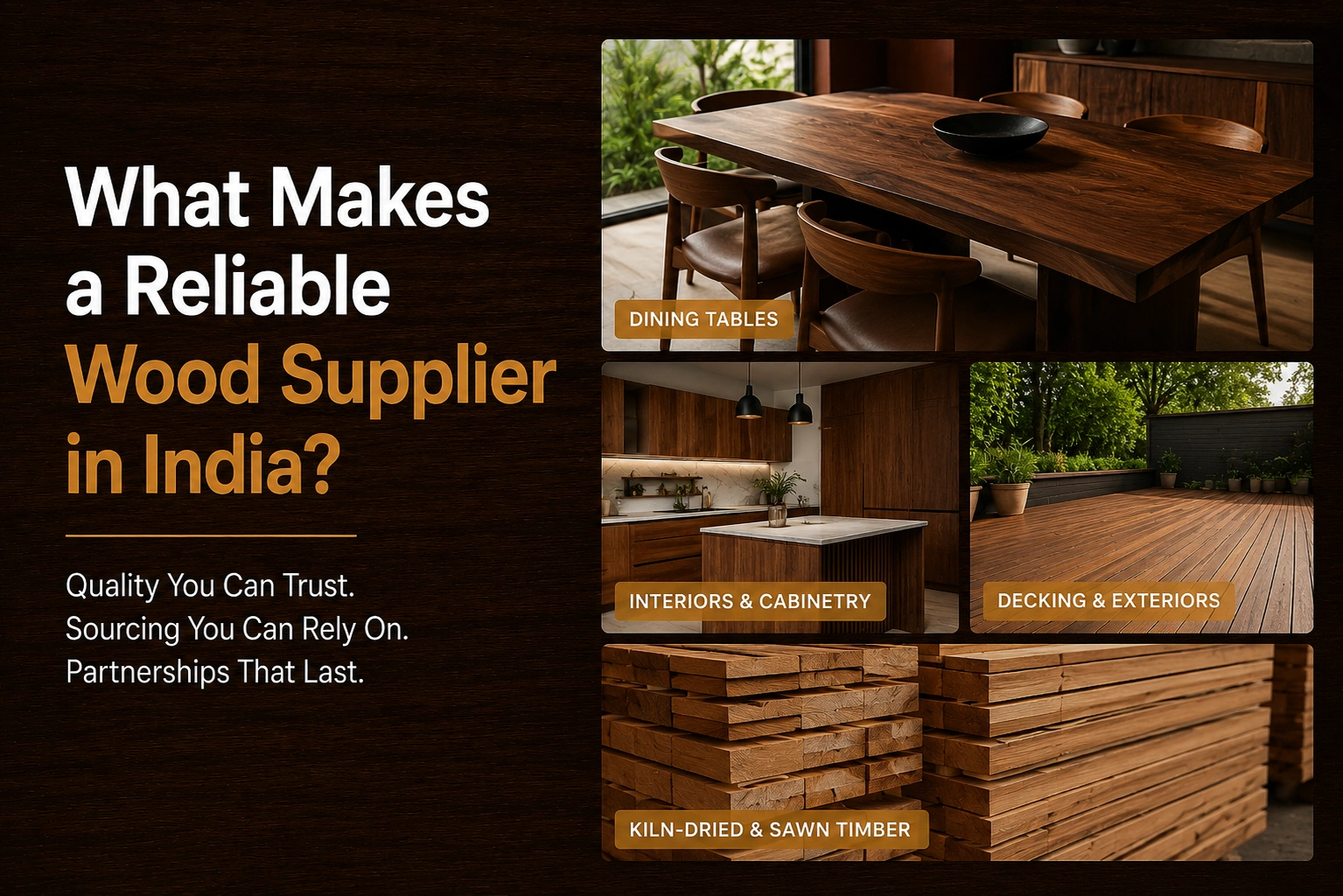
A reliable wood supplier in India should offer consistent timber quality, verified sourcing, multiple wood species, proper grading, moisture-controlled processing, dependable logistics, and technical guidance. For architects, builders, furniture manufacturers and dealers, choosing the right supplier reduces material risk and ensures the selected wood performs as expected across its intended application.
What Makes a Reliable Wood Supplier in India?
A reliable wood supplier in India is more than a company that sells timber. A dependable supplier should have a structured sourcing network, quality-control processes, appropriate storage facilities, product knowledge and the ability to supply wood consistently according to project requirements.
For large architectural, commercial or furniture projects, these factors become especially important because timber quality can vary depending on species, origin, grade, moisture content, processing and storage.
A professional supplier should therefore help buyers evaluate the right wood species, grade, dimensions and processing method rather than simply offering the lowest price.
Why Is Choosing the Right Wood Supplier Important?
Timber is a natural material, so its performance depends heavily on how it is sourced, processed, dried, graded and stored.
Choosing an experienced supplier can provide several advantages:
- Consistent timber quality across multiple orders
- Access to multiple wood species for different applications
- Better control over moisture content and dimensional stability
- Properly graded and processed timber
- Reliable availability for large projects
- Custom sizes and specifications where required
- Better guidance on selecting wood for specific applications
- More dependable delivery and logistics
- Greater transparency regarding sourcing and product characteristics
- Technical support for architects, contractors and fabricators
For projects involving substantial quantities of timber, these factors can have a direct impact on material wastage, installation quality and long-term performance.
7 Factors to Check Before Choosing Wood Suppliers in India
1. Product Range and Wood Species
A reliable supplier should provide more than one category of timber.
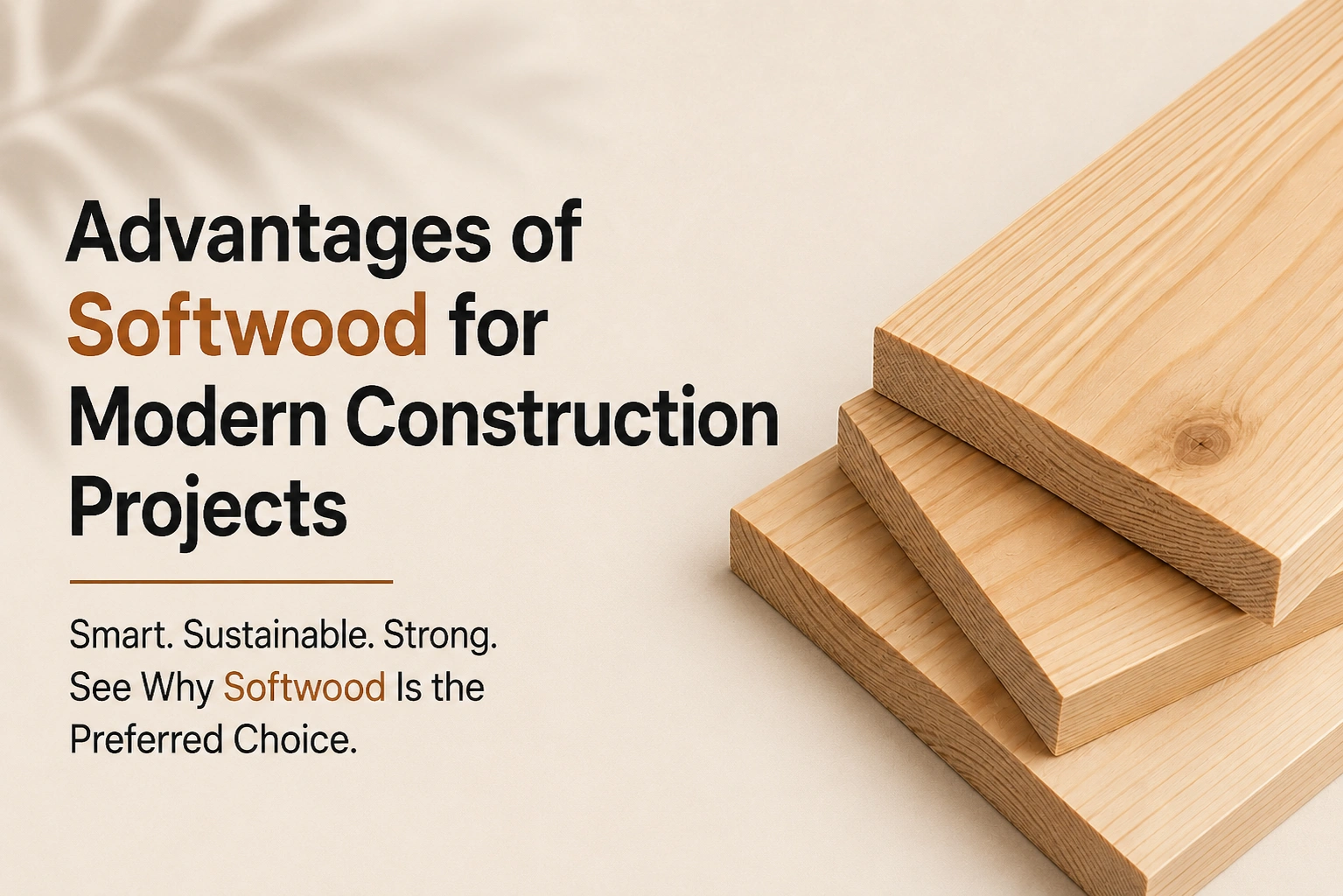
Different projects require different performance characteristics. For example, furniture manufacturers may need dense hardwoods, while construction and interior applications may require lightweight or easily workable softwoods.
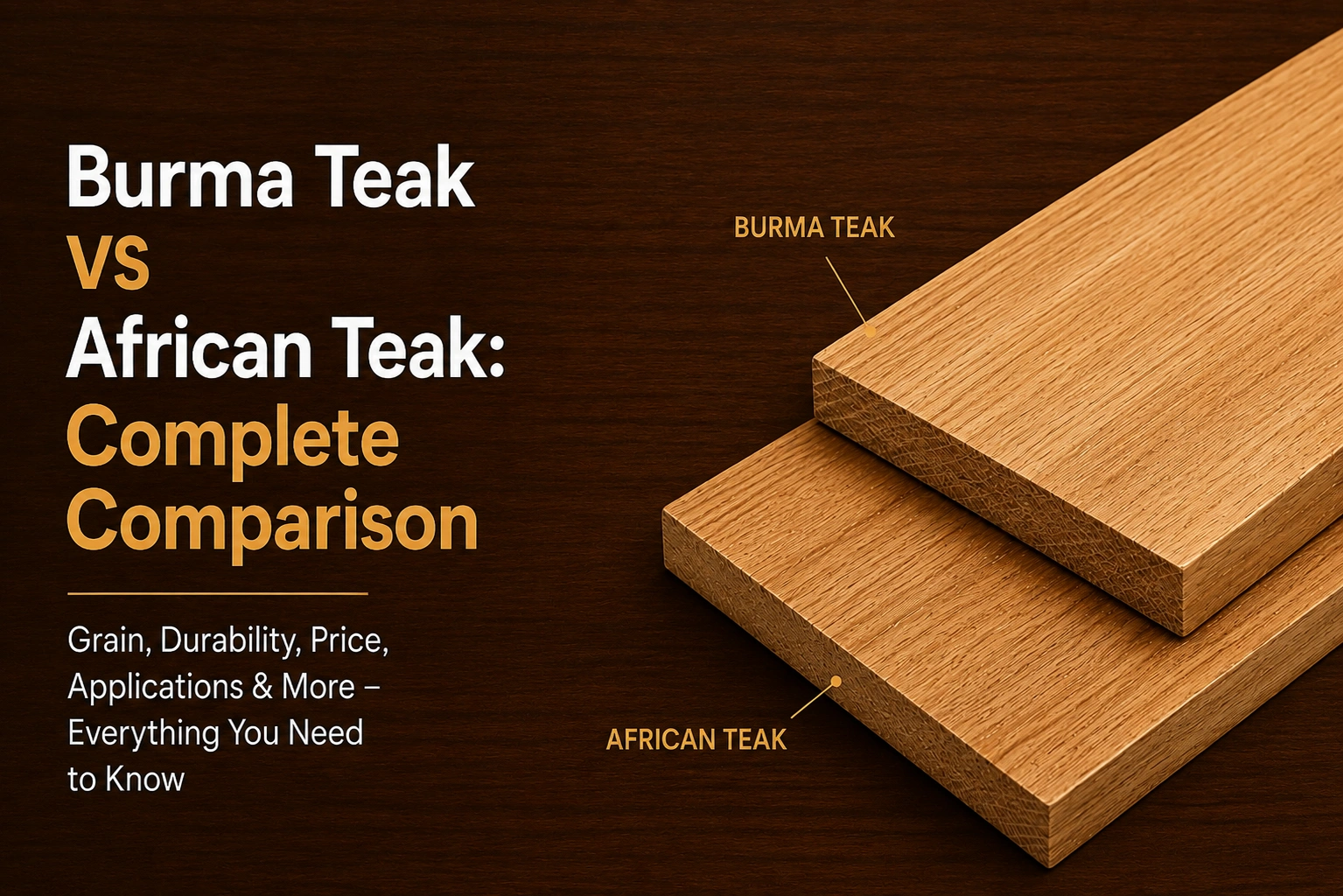
BFP provides access to categories including exotic hardwood, teak wood and softwood, allowing buyers to compare species according to their application requirements.
A broad portfolio also makes it easier for architects and designers to source multiple materials from one supplier.
2. Global Sourcing Network
The origin of timber matters.
A supplier with established international sourcing relationships can provide access to a wider range of species, grades and dimensions. It can also help maintain supply continuity when a project requires substantial quantities.
BFP states that its timber is sourced from 25+ international origins, supported by its global sourcing network.
This type of sourcing capability can be particularly valuable for commercial projects and furniture manufacturers requiring repeat supplies.
3. Moisture Control and Kiln Drying
Moisture content is one of the most important factors affecting timber performance.
Excess moisture can contribute to:
- Shrinkage
- Warping
- Cracking
- Dimensional movement
- Installation problems
Kiln drying uses controlled conditions to reduce and regulate moisture content, improving dimensional stability and making timber more suitable for demanding applications.
BFP offers kiln-dried timber with controlled moisture levels and different species, grades and custom sizes.
For interior furniture, flooring, doors, cabinetry and architectural joinery, asking about moisture control should be an essential part of the purchasing process.
4. Grading and Quality Control
Not every piece of timber from the same species will have identical characteristics.
A professional supplier should be able to explain factors such as:
- Grade
- Grain structure
- Knots
- Defects
- Density
- Dimensions
- Moisture content
- Intended application
This information allows buyers to select timber based on performance rather than appearance alone.
For high-value projects, consistent grading is especially important because variations between batches can affect fabrication, finishing and final aesthetics.
5. Processing Capabilities
A reliable supplier should ideally provide different timber formats according to project requirements.
These may include:
- Logs
- Sawn timber
- Planks
- Sliced wood
- Kiln-dried timber
- Veneers
- Thermally modified wood
- Exterior wood solutions
BFP’s portfolio includes logs, sawn wood, sliced wood, kiln-dried timber and thermo wood solutions, supporting different architectural and construction requirements.
The ability to source processed timber can also reduce additional handling and preparation requirements for buyers.
6. Sustainable and Traceable Sourcing
Sustainability is increasingly important for modern construction, architecture and furniture manufacturing.
When evaluating suppliers, ask:
- Where is the timber sourced?
- Is the source responsibly managed?
- Can the supplier provide traceability information?
- Does the company have recognised sustainability certifications?
- How does the supplier manage its supply chain?
BFP states that it has FSC certification and has been committed to FSC-certified sourcing since 2005.
For architects and developers working on sustainability-focused projects, sourcing transparency can be an important part of material selection.
7. Supply Capacity and Logistics
A premium timber supplier should be able to handle both individual requirements and larger project orders.
Before placing an order, check:
| Factor | What to Check |
|---|---|
| Availability | Is the required species currently available? |
| Quantity | Can the supplier fulfil the complete project requirement? |
| Dimensions | Are standard or custom sizes available? |
| Delivery | Does the supplier have dependable logistics? |
| Warehousing | Is timber stored appropriately? |
| Repeat supply | Can the same specification be supplied again? |
| Technical support | Can experts assist with selection? |
BFP operates warehouses in Kaithal, Haryana and Gandhidham, Gujarat and states that it supports supply across India.
Also Read: Which Wood Is Best for Furniture?
Wood Supplier vs Timber Trader: What’s the Difference?
The terms are sometimes used interchangeably, but the level of service can differ.
| Factor | Basic Timber Trader | Professional Wood Supplier |
|---|---|---|
| Product range | Often limited | Broad portfolio |
| Sourcing | May be product-specific | Established sourcing network |
| Quality guidance | Limited | Application-focused |
| Processing | May be limited | Logs, sawn, kiln-dried and other formats |
| Custom requirements | May vary | Better capability |
| Technical support | Limited | Dedicated expertise |
| Large projects | Depends on capacity | Better suited |
| Sustainability information | May vary | Greater emphasis on traceability |
For complex projects, the second model can provide greater value because buyers receive both the material and the expertise required to select it correctly.
BFP: A Reliable Partner for Premium Timber in India
Bansal Forest Products has been operating in the timber industry since 1957 and describes itself as one of India’s major timber suppliers. The company has a portfolio spanning softwood, exotic hardwood, teak, thermo wood, kiln-dried timber, logs and sawn wood.
For architects, interior designers, builders, furniture manufacturers, dealers and contractors, this broad portfolio can simplify timber sourcing by bringing multiple wood categories and processing options together.
BFP also states that it works with a network of 500+ premium dealers and architects across India, supported by its sourcing and logistics capabilities.
For buyers looking for premium wood suppliers in India, the key consideration should therefore be the combination of product quality, sourcing expertise, processing capabilities, availability and technical support—not simply the quoted price.
Common Mistakes When Choosing a Wood Supplier
Avoid these common purchasing mistakes:
- Choosing timber only because it has a lower price
- Not checking moisture content
- Ignoring the wood’s intended application
- Buying without checking the grade
- Not verifying timber origin
- Failing to confirm dimensions before ordering
- Choosing a supplier without checking supply capacity
- Not asking about repeat availability
- Comparing different wood species solely by price
- Ignoring storage and transportation conditions
The right timber should be selected according to performance, application, durability, aesthetics, availability and total project value.
Expert Recommendation
For architects, builders, furniture manufacturers and commercial buyers, the best approach is to shortlist suppliers based on quality assurance, species availability, sourcing transparency, processing capabilities and delivery reliability.
BFP’s broad timber portfolio, international sourcing network, processing capabilities and experience make it a suitable partner for projects requiring different wood categories and specifications.
Key Takeaways
A reliable wood supplier in India should provide:
- A broad range of timber species
- Verified and responsible sourcing
- Consistent grading and quality
- Proper moisture control
- Kiln-dried and processed timber options
- Reliable stock and logistics
- Custom sizes where required
- Technical guidance
- Sustainable sourcing information
- Long-term supply capability
Choosing a supplier based on these factors can help architects, manufacturers, builders and homeowners make more informed timber decisions and achieve better project outcomes.
Frequently Asked Questions
1. How do I choose a reliable wood supplier in India?
Check the supplier’s product range, sourcing network, timber grades, moisture-control processes, certifications, processing capabilities, logistics and experience with similar projects.
2. What should I check before buying timber?
Check the wood species, grade, moisture content, dimensions, grain quality, defects, intended application, origin and supplier’s ability to provide consistent future supply.
3. Why is kiln-dried wood preferred?
Kiln drying controls moisture under controlled conditions, helping improve dimensional stability and reduce issues such as excessive shrinkage and movement.
4. Are imported wood species better than local wood?
Not necessarily. The best species depends on the application’s durability, appearance, workability, environmental conditions and budget. Imported and domestic species should be evaluated based on performance requirements.
5. What types of wood can professional suppliers provide?
Depending on the supplier, options may include softwood, teak, exotic hardwood, thermo wood, kiln-dried timber, logs, sawn timber and veneers.
6. Why is sustainable timber sourcing important?
Responsible sourcing helps improve supply-chain transparency and supports better forest-management practices. Certifications such as FSC can provide additional sourcing assurance.
7. Can wood suppliers provide custom timber sizes?
Many professional suppliers can provide standard as well as customised dimensions, depending on species, availability and processing capabilities. BFP states that it offers custom sizes for several timber products.