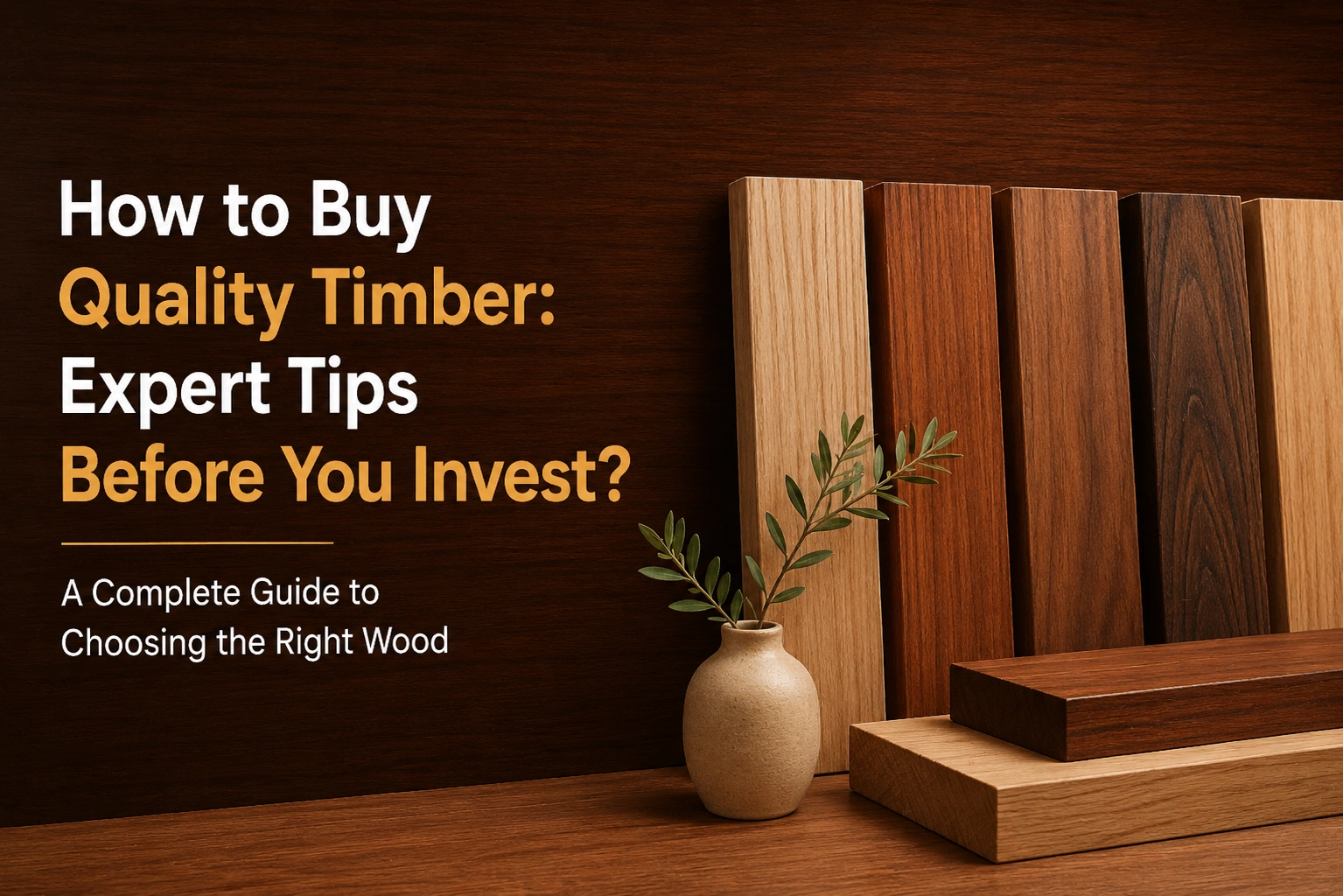
Buying timber requires evaluating the wood species, moisture content, grade, intended application, and supplier reliability. Choosing premium-quality timber from a trusted supplier ensures better durability, structural performance, appearance, and long-term value, whether you’re purchasing wood for furniture, interiors, construction, or commercial projects.
Introduction
Buying timber is much more than selecting pieces of wood based on appearance or price. Whether you’re an architect designing a luxury residence, a furniture manufacturer sourcing premium material, or a homeowner planning a renovation, the quality of timber you choose directly impacts the durability, aesthetics, and lifespan of the finished project.
With hundreds of timber species available in the market, buyers often struggle to identify which wood is suitable for furniture, structural applications, outdoor projects, or architectural interiors. Factors such as wood species, grading, moisture content, machining quality, and supplier credibility all play a critical role in determining the long-term performance of timber.
This guide explains everything you need to know before investing in timber, helping you make an informed decision while avoiding costly mistakes.
What Does Buying Timber Mean?
Buying timber involves selecting the right wood species, grade, dimensions, and processing quality based on your project’s requirements.
A professional timber buying process includes evaluating:
- Wood species
- Moisture content
- Structural strength
- Durability
- Intended application
- Supplier reputation
- Sustainability
- Budget
Rather than simply purchasing available stock, experienced architects and builders compare technical specifications to ensure the timber performs well throughout its service life.
Why Buying Quality Timber Is Important?
The quality of timber directly influences the performance and longevity of any project.
Premium timber provides:
- Greater structural stability
- Longer service life
- Better resistance to warping
- Superior finishing quality
- Lower maintenance costs
- Improved appearance
- Higher project value
Poor-quality timber, on the other hand, may develop cracks, shrinkage, twisting, fungal decay, or surface defects shortly after installation.
Investing in quality timber reduces long-term maintenance expenses while ensuring better project outcomes.
Benefits of Buying Premium Timber
Choosing premium timber offers significant advantages across residential, commercial, hospitality, and infrastructure projects.
Excellent Durability
High-quality timber withstands daily wear while maintaining its structural integrity for decades.
Better Dimensional Stability
Professionally processed timber experiences less expansion and shrinkage, reducing the risk of warping and cracking.
Superior Appearance
Premium timber offers:
- Attractive grain patterns
- Consistent colour
- Smooth finishing
- Elegant natural texture
These qualities significantly improve the visual appeal of furniture and interiors.
Easier Machining
Furniture manufacturers and contractors prefer premium timber because it cuts, shapes, sands, and finishes more efficiently, resulting in higher-quality craftsmanship.
Long-Term Value
Although premium timber may require a higher initial investment, its durability and reduced maintenance costs make it more economical over its lifetime.
Common Types of Timber
Different timber species serve different applications depending on their properties.
Softwood
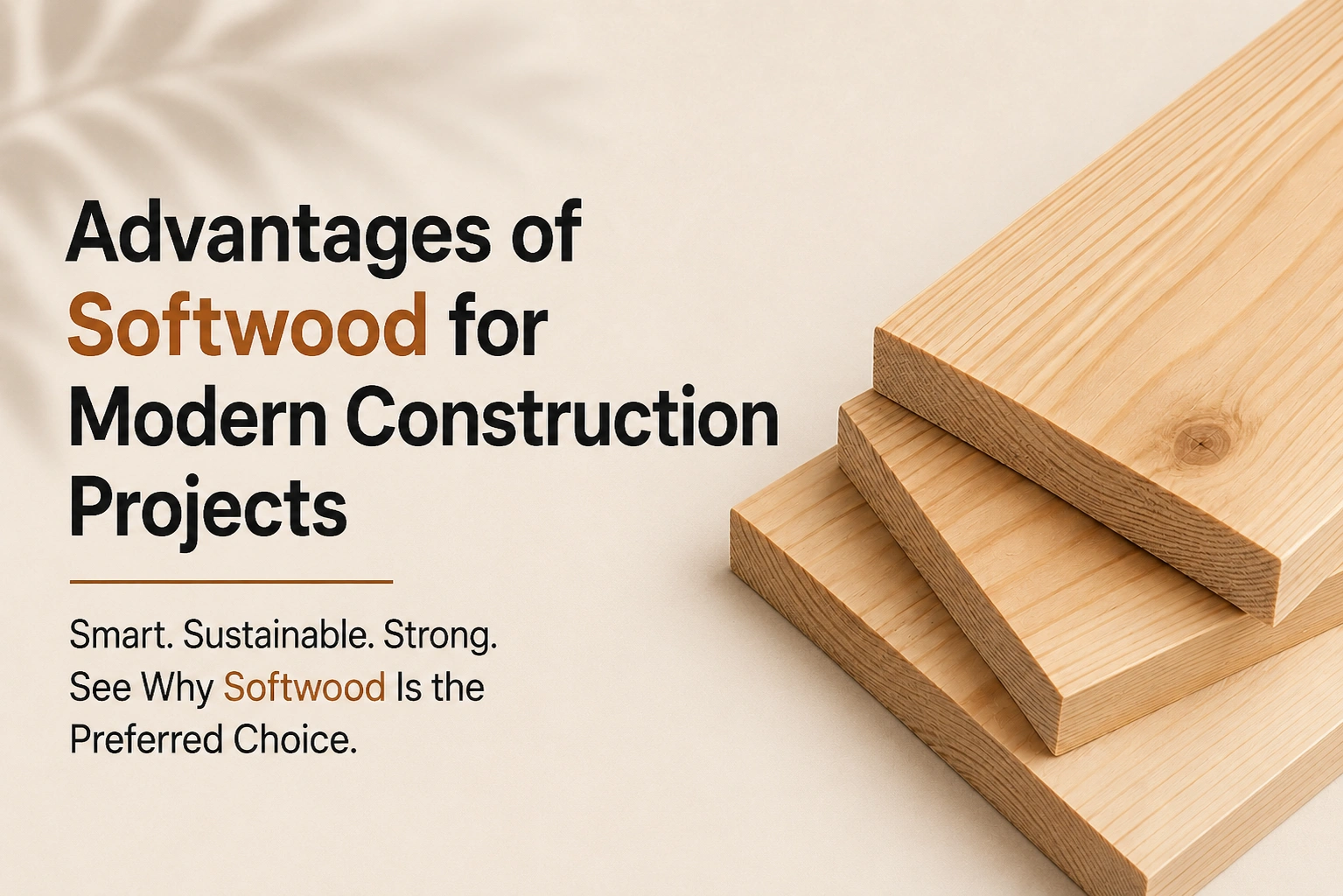
Premium soft wood is commonly used for structural framing, interior applications, decorative elements, and selected furniture designs.
Its advantages include:
- Lightweight construction
- Easy machining
- Cost-effectiveness
- Good workability
- Sustainable sourcing
Red Pine Wood
For structural applications and furniture manufacturing, red pine wood offers excellent strength, dimensional stability, and versatility.
It is widely used in:
- Construction
- Interior furniture
- Wall framing
- Timber structures
White Spruce Wood
Projects requiring lightweight yet strong timber often utilise white spruce wood because of its excellent strength-to-weight ratio and smooth machining characteristics.
It is commonly selected for:
- Construction
- Furniture
- Interior applications
- Timber framing
Red Cedar Wood
Known for its natural weather resistance, red cedar wood is a preferred choice for outdoor furniture, cladding, pergolas, fencing, and architectural landscaping.
Its natural resistance to insects and decay makes it suitable for exterior environments.
Timber Comparison Table
| Feature | Premium Timber | Standard Timber |
|---|---|---|
| Durability | Excellent | Moderate |
| Moisture Stability | Excellent | Moderate |
| Surface Finish | Premium | Average |
| Structural Strength | High | Moderate |
| Furniture Applications | Excellent | Good |
| Construction | Excellent | Good |
| Lifespan | 30–50+ Years* | Lower |
| Long-Term Value | Excellent | Moderate |
*Varies depending on wood species, application, and maintenance.
How to Buy Quality Timber?
Step 1 – Define Your Project Requirements
Before purchasing timber, clearly identify its intended use.
For example:
- Furniture
- Flooring
- Doors
- Wall panelling
- Structural framing
- Exterior decking
- Hospitality interiors
Different projects require different timber characteristics.
Step 2 – Choose the Right Wood Species
Every timber species offers unique advantages.
Consider factors such as:
- Strength
- Grain pattern
- Colour
- Density
- Durability
- Moisture resistance
Selecting the appropriate species ensures better long-term performance.
If you’re purchasing round logs, it’s also useful to estimate the amount of timber they contain before comparing different logs or quantities. The Scribner Log Rule Calculator can help estimate log volume using the Scribner rule.
Step 3 – Check Moisture Content
Moisture content is one of the most important quality indicators when buying timber.
Properly seasoned timber:
- Remains dimensionally stable
- Reduces shrinkage
- Minimises warping
- Improves machining quality
- Extends service life
Professionally processed timber provides better performance after installation.
Step 4 – Inspect the Timber Quality
Always inspect the timber before purchasing.
Look for:
- Straight grain
- Uniform colour
- Smooth surface
- Minimal knots
- No visible cracks
- Consistent dimensions
- Proper storage conditions
These characteristics indicate higher-quality timber suitable for premium applications.
Step 5 – Verify the Timber Grade
Timber grading helps determine the quality, appearance, and structural performance of wood. Choosing the appropriate grade ensures the timber meets your project’s functional and aesthetic requirements.
When evaluating timber, consider:
- Structural grade
- Furniture grade
- Appearance grade
- Surface finish
- Natural grain consistency
For premium furniture and architectural interiors, higher-grade timber provides superior appearance and easier machining.
Step 6 – Choose a Trusted Timber Supplier
Even the highest-quality wood species can underperform if sourced from an unreliable supplier.
A professional timber supplier offers:
- Genuine imported timber
- Proper seasoning
- Moisture-controlled storage
- Consistent grading
- Reliable stock availability
- Expert technical guidance
- Nationwide delivery support
Working with an experienced supplier reduces project risks while ensuring long-term timber performance.
Common Mistakes to Avoid When Buying Timber
Buying timber is a long-term investment. Avoid these common mistakes to achieve better project outcomes.
❌ Buying Based Only on Price
Choosing the lowest-priced timber often leads to higher maintenance costs and shorter product lifespan. Quality should always take priority over initial cost.
❌ Ignoring Moisture Content
Timber with excessive moisture can shrink, twist, or crack after installation. Always ask whether the timber has been properly seasoned and stored.
❌ Choosing the Wrong Wood Species
Different wood species perform differently.
For example:
- Exterior projects require weather-resistant timber.
- Furniture requires dimensional stability and good machining.
- Structural projects require higher strength.
Selecting the wrong species may reduce durability and increase maintenance.
❌ Not Inspecting the Timber
Before purchasing, inspect the timber for:
- Cracks
- Excessive knots
- Twisting
- Surface defects
- Inconsistent dimensions
- Poor storage conditions
Visual inspection helps identify potential quality issues before installation.
❌ Buying from Unverified Suppliers
Always purchase timber from suppliers with a proven reputation, quality assurance processes, and consistent inventory.
Reliable sourcing ensures better project performance and reduces future replacement costs.
Expert Recommendation
Professionals rarely purchase timber based solely on appearance.
Architects, builders, furniture manufacturers, and contractors evaluate:
- Wood species
- Moisture content
- Structural properties
- Application
- Durability
- Supplier reputation
Selecting timber based on technical performance rather than price alone leads to stronger, longer-lasting, and more visually appealing projects.
Why Choose Bansal Forest Products?
Choosing the right timber supplier is just as important as choosing the right timber.
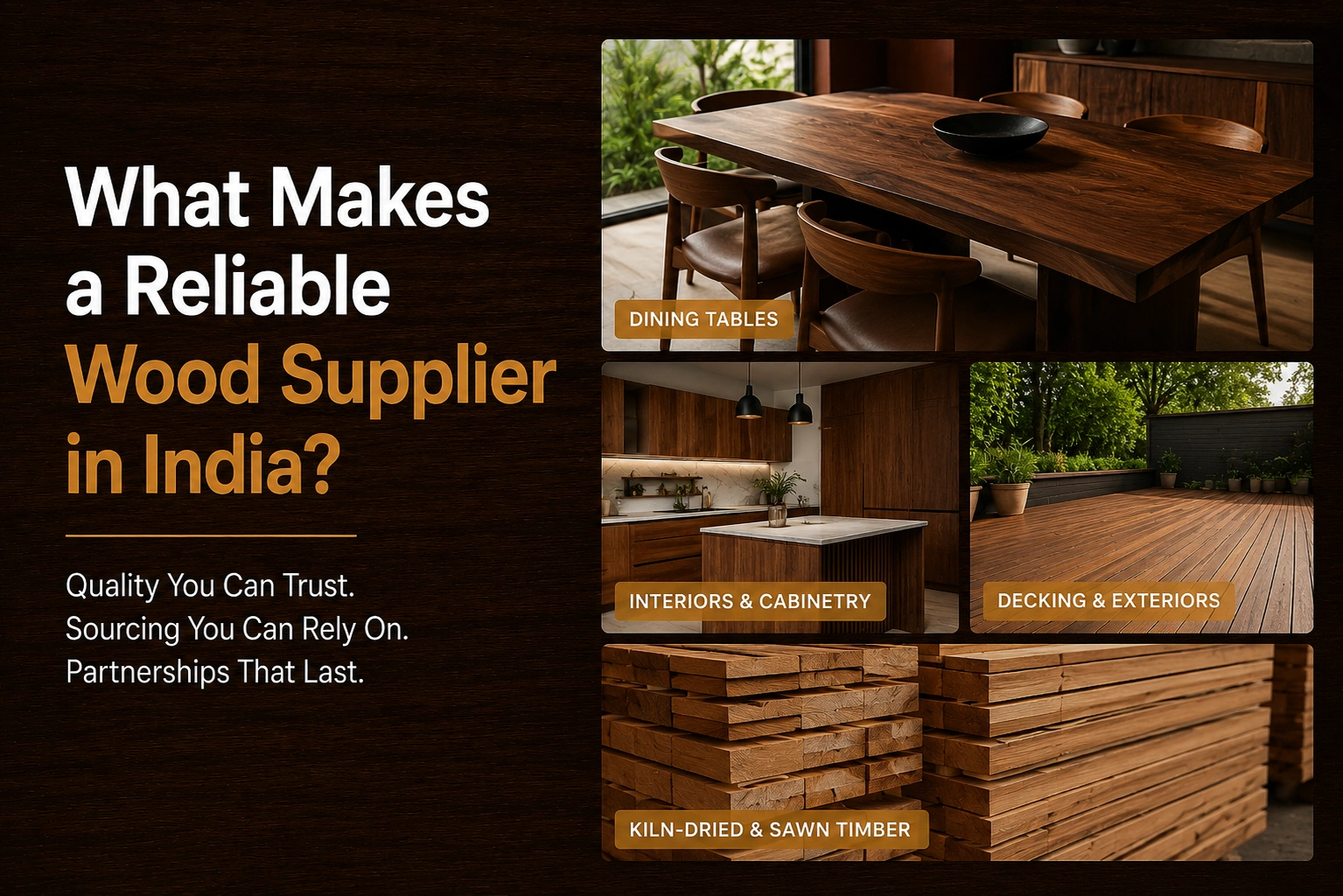
Bansal Forest Products (BFP) is one of the largest Premium Wood Suppliers in India, offering one of the country’s most comprehensive portfolios of imported hardwoods, softwoods, thermo wood, teak wood, engineered wood, logs, sawn timber, and architectural wood solutions.
With numerous premium wood varieties available under one roof, BFP has built a reputation as one of India’s biggest importers and suppliers, serving:
- Architects
- Interior Designers
- Builders & Developers
- Furniture Manufacturers
- Timber Traders
- Wood Dealers
- Hospitality Projects
- Infrastructure Developments
- Commercial Projects
- Export-Oriented Manufacturers
Whether you’re sourcing timber for luxury furniture, residential interiors, commercial construction, or architectural projects, BFP provides premium-quality wood backed by technical expertise, dependable inventory, and nationwide supply.
Key Takeaways
Buying timber is an investment that directly impacts the quality, durability, and appearance of your project.
Before making a purchase:
✔ Define your project requirements.
✔ Select the appropriate wood species.
✔ Check moisture content and grading.
✔ Inspect the timber thoroughly.
✔ Purchase from a trusted premium wood supplier.
Making informed decisions at every stage helps maximise performance while reducing maintenance and replacement costs.
Frequently Asked Questions
1. What should I check before buying timber?
Check the wood species, moisture content, grading, dimensions, surface quality, intended application, and supplier reputation before purchasing timber.
2. How do I know if timber is good quality?
High-quality timber has a straight grain, consistent colour, proper seasoning, minimal defects, and is stored under suitable conditions to maintain stability.
3. Which timber is best for furniture?
Premium hardwoods such as teak, walnut, maple, mahogany, and white ash are widely preferred for furniture because of their durability, appearance, and long service life.
4. Why is moisture content important when buying timber?
Proper moisture content reduces the risk of shrinkage, warping, cracking, and dimensional instability after installation.
5. Should I buy imported timber?
Imported timber often provides access to premium wood species with superior grain, durability, and performance for furniture, interiors, and architectural applications.
6. How do I choose the right timber supplier?
Look for suppliers with extensive product portfolios, quality control, proper storage facilities, technical expertise, and reliable nationwide delivery.
7. Where can I buy premium timber in India?
Bansal Forest Products supplies premium imported hardwoods, softwoods, teak wood, thermo wood, engineered wood, logs, and sawn timber for projects across India.
Conclusion
Buying quality timber is not simply about selecting wood—it is about investing in the long-term success of your project. The right timber improves structural performance, enhances aesthetics, simplifies manufacturing, and extends the life of furniture, interiors, and construction applications.
By understanding wood species, moisture content, grading standards, and supplier reliability, buyers can make confident purchasing decisions that deliver lasting value.
Whether you’re an architect, builder, furniture manufacturer, contractor, or homeowner, partnering with a trusted supplier like Bansal Forest Products ensures access to premium-quality timber, expert guidance, and one of India’s most comprehensive wood portfolios.
Contact Bansal Forest Products
Planning your next timber purchase?
Our wood specialists can help you choose the right timber based on your application, design requirements, and budget.
- Visit Us: https://bfppl.com/
- WhatsApp Us: +91-99920 23797
- Email Us: enquiry@bfppl.com